Table of Content
When it comes to enhancing the value, functionality, and aesthetic of your landed property, choosing between a full rebuild and a renovation isn’t always straightforward. Do you want total design freedom and long-term gains, or a quicker, more budget-friendly upgrade that preserves what already works? At PCE Build, we support both approaches—whether you’re looking to maximise your land with a complete rebuild or refresh interiors and layouts through innovative additions and alterations. In this guide, we’ll explore the key differences between a rebuild and a renovation, weighing factors like cost, time, regulatory approvals, and design flexibility, so you can make the decision that best suits your vision and goals.
Key Takeaways
- Rebuilding offers complete design flexibility and the opportunity for full modernisation. By starting from scratch, homeowners can create a layout that perfectly suits their lifestyle, integrate the latest building technologies, and maximise energy efficiency. This option is ideal for those seeking a completely new look or needing to address structural issues beyond repair.
- Renovation focuses on enhancing existing structures while preserving their unique character. It allows homeowners to modernise interiors, improve functionality, and refresh aesthetics without demolishing the entire property. Renovations can also help retain the charm of heritage features or architectural details that add value to the home.
- Cost considerations differ significantly between the two approaches. Rebuilding typically requires a higher upfront investment due to demolition, new construction materials, and labour. Renovations may seem more affordable initially, but hidden expenses—such as structural repairs, rewiring, or plumbing upgrades—can quickly add up.
- Project timelines vary and require careful planning. A renovation can often be completed in 6–12 months, depending on the scale of work, while a full rebuild generally takes 12–24 months or longer. Both options should factor in potential delays caused by supply shortages, weather conditions, or regulatory approvals.
Landed Property Rebuild vs. Renovation
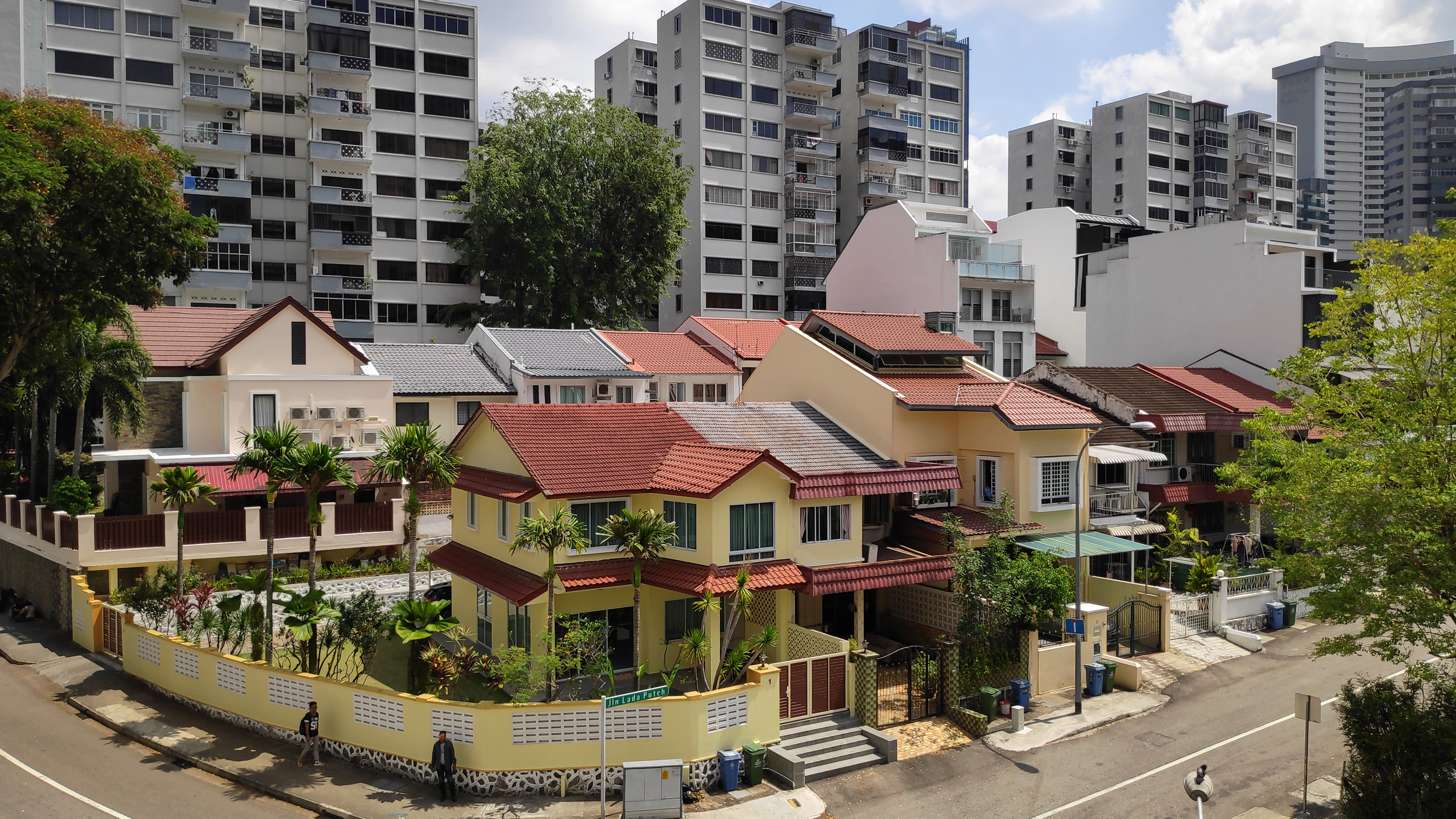
Rebuilding a landed house design involves demolishing the entire property and constructing a brand-new home from the ground up. This option offers complete design freedom, allowing homeowners to create a property that perfectly matches their lifestyle, aesthetic preferences, and modern living standards.
In contrast, landed property renovation focuses on enhancing the existing structure without full demolition. It preserves the character and architectural elements of the original home while updating it for improved functionality and comfort. This approach can also result in a refreshed landed dwelling that better aligns with contemporary needs.
In Singapore, homeowners often face the choice between alterations and additions and a complete rebuild.
- Rebuilds are preferred when the existing property is structurally unsound or outdated, as they allow for complete modernisation and potentially better long-term sustainability.
- Renovations are more cost-effective when the house remains in good structural condition, as they focus on targeted improvements while maintaining the current building framework.
The goals differ as well:
- Rebuilding aims to deliver a brand-new home with modern layouts, energy-efficient features, and enhanced long-term value.
- Renovating seeks to maintain the charm of the original home while improving livability and boosting property value with lower upfront costs.
Understanding these core differences is key to making an informed decision about your property’s future — whether you want a fresh start or a thoughtful upgrade.
Landed Property Rebuild vs. Renovation: Which Is Better?
When deciding between rebuilding or renovating your landed property, the “better” choice ultimately depends on your goals, budget, property condition, and long-term plans.
When a Rebuild May Be Better:
- Your home is structurally unsound or outdated beyond repair.
- You want maximum landed house design flexibility.
- You’re prepared for a longer timeline and higher cost for a long-term payoff.
When a Renovation May Be Better:
- You love the character of your existing home.
- Your property is in good condition but needs modernisation.
- You want a more cost-efficient and quicker upgrade.
Neither option is universally “better” — it’s about aligning the choice with your budget, lifestyle goals, and the current state of your home. If your priority is an entirely fresh start, rebuilding wins. If you want to preserve charm while improving livability, renovation is the way to go.
Cost Implications
Cost is one of the most influential factors when deciding between rebuilding and renovating a landed property in Singapore.
A full rebuild can range anywhere from hundreds of thousands to several million dollars, depending on landed house design complexity, materials, and contractor rates. While emerging trends like modular construction are helping to lower costs and shorten build times, a rebuild still generally requires a much higher upfront investment compared to renovation.
Renovations, particularly Addition & Alteration works, typically cost between $300,000- $800,000 in Singapore. While these figures are more budget-friendly, it’s essential to account for hidden expenses, such as:
- Site preparation (especially on challenging terrain)
- Temporary housing during construction
- Post-construction cleanup and reinstatement works
These can quickly add up, sometimes narrowing the cost gap between rebuilding and renovating.
- If you have the budget and want a completely new home with modern features, rebuilding may be worth the higher investment.
- If your priority is cost-efficiency and your home’s structure is sound, renovation offers a more affordable path — but watch out for unforeseen costs.
Timeframe Considerations
When deciding between rebuilding and renovating a landed property in Singapore, cost and time are often the two biggest deciding factors. Both options come with distinct financial commitments and timelines, and understanding these differences can help homeowners make an informed choice that aligns with their budget, lifestyle, and long-term plans.
| Factor | Rebuild | Renovation |
|---|---|---|
| Estimated Cost | Hundreds of thousands to several million dollars | $300,000 – $800,000 |
| Hidden Costs | Land preparation, temporary housing, post-build cleanup | Less extensive land prep, potential unexpected repairs |
| Budget Suitability | Best for higher budgets seeking a completely new home | More budget-friendly if structure is sound |
| Timeframe | 12 – 24+ months (includes demolition phase) | 6 – 12 months |
| Potential Delays | Site conditions, demolition, structural issues | Structural issues, permit delays |
Rebuilding offers complete design freedom and modernisation, but demands a higher financial investment and a longer construction period. Renovation is generally faster and more affordable, making it ideal when the existing structure is in good condition. Ultimately, the better option depends on your available budget, desired timeline, and whether you value preserving the original character of your home or starting fresh with a modern landed house design.
Regulatory Approvals and Compliance
Navigating regulatory requirements is an important part of deciding whether to rebuild or renovate a landed property in Singapore. The Urban Redevelopment Authority (URA) sets strict guidelines to maintain estate character and uniformity. These rules affect project scope, cost, and timeline, making it essential for homeowners to understand compliance obligations before starting work.
| Factor | Rebuild | Renovation |
|---|---|---|
| Regulatory Stringency | More stringent, requires full planning approval | Less stringent, typically easier to navigate |
| URA Guidelines | Treated as a new build; must comply with current planning parameters | Must not exceed 50% of existing approved gross floor area |
| Structural Changes Allowed | No restrictions (new structure entirely) | Limited to altering up to 50% of original structure |
| Height Limitations | Subject to URA’s maximum height rules for landed homes | Increase in storey height may reclassify as reconstruction |
| Approval Complexity | Higher – may require more consultants and longer processing time | Lower – but still requires compliance with URA’s A&A guidelines |
While renovations generally face fewer regulatory hurdles, they still must adhere to URA’s strict guidelines, particularly regarding gross floor area and structural changes. Rebuilds, on the other hand, involve more complex approvals but allow complete landed house design freedom within current zoning and planning parameters. Whichever route you choose, engaging qualified consultants early in the process can help ensure compliance, avoid costly mistakes, and prevent project delays.
Property Value Impact
One of the biggest factors influencing the decision between rebuilding and renovating a landed property in Singapore is the potential effect on its market value. While both options can enhance appeal and functionality, the extent of value increase varies greatly depending on the approach.
| Factor | Rebuild | Renovation |
|---|---|---|
| Market Appeal | Higher due to new construction, modern layouts, and updated features | Moderate – improvements within existing structure |
| Energy Efficiency | Easier to integrate modern energy-saving systems, appealing to buyers | Limited by existing infrastructure, though upgrades are possible |
| Customization Level | Full design freedom to meet current and future needs | Must work around existing layout, limiting some landed house design changes |
| Resale Price Potential | Often commands higher selling price compared to renovated older homes | Can improve value, but increases may plateau if costs exceed ~50% of market value |
| Long-Term Investment Value | Strong, especially if aligned with family’s future lifestyle needs | Moderate, suitable for enhancing livability without full rebuild cost |
Rebuilding offers the strongest potential for boosting property value, thanks to modern landed house design, improved energy efficiency, and buyer appeal. However, it comes at a higher upfront cost and longer timeline. Renovation is a strategic choice for those seeking cost-effective improvements, but its impact on resale value may be more limited, especially when constrained by the existing structure. For maximum return on investment, homeowners should balance their budget, long-term goals, and market trends before making a decision.
Structural Integrity and Existing Character
Before deciding between a rebuild and renovation, homeowners must evaluate the structural condition and historical significance of their property. The building’s current strength and architectural value often dictate the feasibility and advisability of each approach.
| Factor | Rebuild | Renovation |
|---|---|---|
| Structural Integrity Requirements | Full demolition removes all existing weaknesses, allowing new structure to meet modern safety codes | Must work within existing framework; structural issues may limit modifications |
| Preservation of Historical Features | Original features typically lost unless replicated in new landed house design | Greater potential to retain and restore original architectural details |
| Suitability for Additional Modifications | No limitations—entirely new framework supports modern systems and layouts | Dependent on existing structure’s ability to bear additional loads or changes |
| Balance Between Modernization & Heritage | Prioritizes modernization; heritage elements can be incorporated if intentionally designed | Naturally leans toward preserving heritage while upgrading comfort and functionality |
| Risk of Structural Limitations | Low—new build eliminates old weaknesses | Higher—older foundations and materials may restrict scope of works |
Structural integrity and heritage considerations play a decisive role in determining whether to rebuild or renovate. Rebuilding ensures a structurally sound, fully modernised home, but often at the cost of losing original character. Renovation allows for preservation of historical elements, but may require compromises due to structural limitations. A thorough structural assessment and heritage evaluation are essential for choosing the approach that best balances safety, functionality, and character.
Design Flexibility
Landed house design flexibility plays a crucial role in how well a property meets the needs of modern living. While both rebuilding and renovation can enhance a home’s layout and features, rebuilding offers far greater scope for creativity and innovation.
| Factor | Rebuild | Renovation |
|---|---|---|
| Customization Level | Full customization with no constraints from existing layout | Limited by original floor plan, load-bearing walls, and structural elements |
| Incorporation of Modern Features | Easy to include open-plan layouts, smart home systems, and energy-efficient features | Possible but may require costly structural changes or compromises |
| Orientation & Natural Light | Can be optimized from the ground up for sunlight, ventilation, and energy efficiency | Limited by existing building’s position and structural openings |
| Property Type Impact | Greater flexibility with bungalows; still adaptable for semi-detached or terrace houses | More restrictions, especially in attached housing types where structural changes affect shared walls |
| Adaptability to Future Needs | High—can design with future expansions, accessibility, and lifestyle changes in mind | Moderate—adaptations depend on existing framework’s capacity |
Rebuilding offers unmatched landed house design flexibility, giving homeowners complete creative control over layout, orientation, and features. Renovations can improve an existing home, but are often limited by its original structure. If long-term adaptability and modern amenities are a priority, a rebuild provides more freedom to achieve those goals.
Expert Advice and Professional Guidance
Engaging experienced professionals is a vital step in deciding between rebuilding and renovating a landed property in Singapore. Their insights help ensure your plans are realistic, cost-effective, and fully compliant with regulatory requirements.
Why Expert Guidance Matters
- Feasibility Assessment – Professionals can evaluate whether your vision is structurally and financially achievable.
- Regulatory Navigation – Consultants are well-versed in URA and BCA regulations, helping you secure approvals faster and avoid non-compliance issues.
- Budget Control – They can anticipate hidden costs, manage contractor quotes, and plan for contingencies to keep the project within budget.
- Design Optimisation – Experienced architects and home builders can suggest layout improvements, material choices, and construction methods that enhance both aesthetics and functionality.
- Risk Identification – Early detection of potential hazards, such as structural weaknesses or soil instability, reduces the likelihood of costly setbacks.
- Project Coordination – Having a single point of contact streamlines communication, reduces misunderstandings, and keeps all parties aligned.
- Quality Assurance – Professionals ensure workmanship meets industry standards, from structural elements to finishing touches.
- Insurance Considerations – Builder’s risk insurance protects against financial losses from accidents, natural disasters, or theft during construction.
Expert advice is more than just guidance—it’s a safeguard for your investment. From preventing costly mistakes to ensuring quality and compliance, professionals give homeowners confidence that their rebuild or renovation will be executed efficiently, safely, and to the highest standard.
Transform Your Landed Property with PCE Build’s Expert Rebuild and Renovation Ser

Ready to turn your landed property into the home you’ve always envisioned? Whether you choose a complete rebuild for maximum design freedom or a strategic renovation to preserve character while enhancing functionality, PCE Build offers the experience, precision, and creativity to bring your vision to life. From careful planning to flawless execution, our team ensures every detail aligns with your budget, timeline, and lifestyle—resulting in a home that’s as beautiful as it is enduring. Contact us today!
Frequently Asked Questions
How do environmental considerations differ between rebuilding and renovating?
Renovation often has a smaller environmental footprint as it reuses existing materials and structure, reducing demolition waste. Rebuilding can be more resource-intensive but provides an opportunity to integrate energy-efficient systems, sustainable construction methods, and eco-friendly materials from the start, potentially lowering the home’s long-term carbon footprint.
Can I live in my home during renovation or rebuilding?
During most renovations, it’s possible to remain in the home, especially for minor or phased works, although there may be disruptions from dust, noise, and limited access to certain areas. In contrast, a full rebuild requires complete demolition, so homeowners will need to arrange alternative accommodation for the entire duration of the project.
How does property age influence the decision to rebuild or renovate?
The age of the property can be a deciding factor. Older homes may have structural wear, outdated wiring, and plumbing that make renovation less practical. In such cases, rebuilding can be more cost-efficient in the long term, as it allows complete replacement of ageing systems and compliance with modern building codes. Conversely, well-maintained properties with a strong structural base often benefit more from targeted renovations.
Which option has a higher resale value?
A rebuilt home typically commands a higher resale value due to its new construction, updated features, and modern compliance standards. However, a well-executed renovation that enhances both aesthetics and functionality can also significantly increase property value. The impact on resale depends on location, design appeal, and quality of materials used.
How does financing differ between the two options?
Banks and financial institutions may offer different loan structures for renovation and rebuilding. Renovation loans often have lower interest rates and shorter repayment periods. At the same time, a rebuild might require a construction loan, which is typically larger and disbursed in stages as the project progresses. Homeowners should review available financing options early in the planning process.