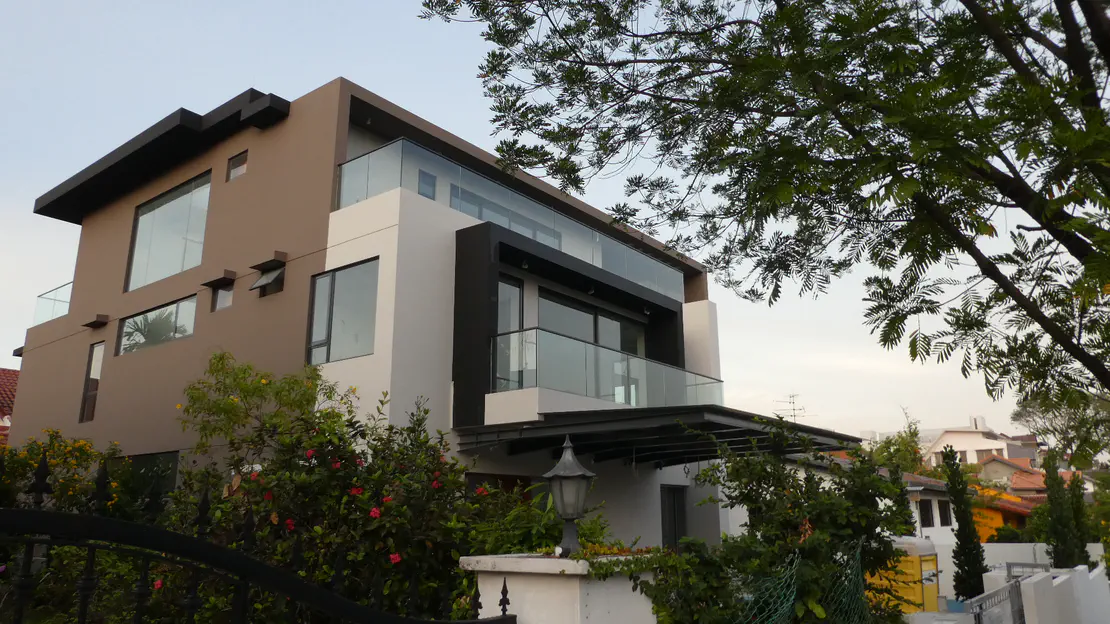
When you’re a homeowner in Singapore planning to renovate, upgrade, or rebuild a landed house, you’ll face a maze of requirements from both URA and BCA.
These include zoning under the URA Master Plan, envelope control guidelines such as allowable building height, setback limits, and GFA rules, plus BCA compliance: plan submission, builder licensing, structural and safety approvals, and adherence to construction timelines.
A competent landed house contractor in Singapore doesn’t just build. They manage the regulatory, technical, and construction aspects, coordinate the Qualified Person (QP), ensure correct submissions to authorities, handle site management, and keep your project compliant from start to finish.
This article will help you understand precisely what a landed-house contractor handles for you, the difference between A&A vs rebuild, and how to avoid costly mistakes with URA/BCA requirements, so your landed home project proceeds smoothly, legally, and on time.
Key Takeaways
- A good contractor for your landed house in Singapore manages both URA zoning/envelope matters and BCA submission/safety processes.
- Whether you’re doing A&A (Additions & Alterations) or a full rebuild, the contractor advises on the correct pathway and handles submissions accordingly.
- Safety, site management and neighbour relations are integral in landed-house works: the contractor must coordinate with your QP and build responsibly.
- Clear timelines, scope, and compliance minimise costs, risks, and delays. Select a builder who brings this ledger to you.
What the Contractor Manages: Regulatory & Submissions
For any landed home renovation or rebuild in Singapore, many approvals are required before work can start. A good contractor takes care of these for you so you don’t have to figure out the regulations yourself.
URA Approvals (Design and Land Rules)
If you’re doing A&A for a landed house, the contractor prepares the proposal. Then, your contractor works with your architect/engineer (QP) to ensure:
- Your property is zoned Residential under the URA Master Plan
- Your home follows the allowed height, number of storeys, and setback distances
- The total floor area (GFA) stays within approved limits
If your house has older features that are no longer permitted, the contractor will ensure the QP submits the necessary certifications to URA so you don’t run into problems later.
In other words, landed home contractors ensure your design complies with Singapore’s laws.
BCA Approvals (Safety, Structure & Builder Licensing)
BCA approvals ensure that the house is safe to build and live in. That’s why an efficient contractor will:
- Work only with BCA-licensed builders
- Submit building plans through the CORENET system
- Get approvals for architectural, structural, and M&E (electrical/drainage) works
- Confirm which small works don’t need submission to avoid guesswork
When it comes to handling BCA submissions, your contractor ensures the house is built safely and properly.
Contractor-led Coordination
Renovating or rebuilding a landed home involves many parties and approvals. Instead of you calling different agencies and chasing documents, your contractor takes the lead and keeps everyone aligned:
- Architect & Structural Engineer (QP): Ensures designs and structural plans meet URA and BCA requirements before submission.
- URA (Urban Redevelopment Authority): Planning approval for building height, setbacks, and overall house design.
- BCA (Building & Construction Authority): Safety approvals, builder licensing, and permission for structural works.
- Other Technical Agencies: Coordinates drainage, sewer, electricity and water requirements with relevant government departments.
- On-Site Construction Team: Supervises safety, quality of work, and compliance during construction.
Your contractor keeps track of deadlines, clarifies queries from authorities, updates you on progress and ensures that nothing slips through the cracks.
They manage the entire approval process and construction coordination, so you enjoy a smooth project without stress.
A&A vs Rebuild – What the Contractor Advises
What is A&A?
Additions & Alterations (A&A) means the existing building stays, and you make changes, such as extensions, internal re-configuration, an added attic, and a new roof.
The contractor will advise you whether your scheme qualifies as A&A under URA’s guidelines. For example, URA’s A&A guideline for a landed house states: the same dwelling-unit remains, there’s no change in housing type, and compliance with envelope control.
What is Reconstruction / Rebuild?
If the works are more substantial—say removing more than 50 % of the building (in terms of GFA addition, external walls removal/ replacement, structural elements change) or increasing storey height—then URA/BCA treat it as reconstruction or new erection, not just A&A.
Why it matters for you
Choosing A&A vs rebuild has significant implications: cost, timeline, submission complexity, design flexibility, and regulatory scope.
A competent landed-house contractor will help you evaluate which route is realistic for your site, budget and goals.
Comparison Table: A&A vs. Reconstruction/Rebuild
| Scope | Typical Works | Submission Implications | Cost/Timeline |
|---|---|---|---|
| A&A (Additions & Alterations) | Extensions, internal re-configuration, and a new roof without an extra storey | URA A&A criteria apply; simpler BCA submission if within envelope, may use “simplified submission” for landed houses. | Lower cost, shorter timeline |
| Rebuild / New Erection | Full demolition, new build, new storeys, changed housing type | Full URA planning permission, full BCA building-plan submission, new builder permits, possibly new TOP/CSC. | Higher cost, longer timeline |
What the contractor does for you
- Assess whether your landed home project is feasible under A&A rules (with allowance for “non-conforming” retention, etc).
- If a rebuild is required, coordinate the new submission pathway: full knock-down, new approval, builder selection, monitoring of schedule and cost.
- Advise on design flexibility: While A&A may limit you in terms of envelope control, rebuild offers more freedom but also a greater regulatory burden.
- Provide a transparent cost/timeline breakdown so you understand the trade-offs.
Safety, Site Management & Neighbour Relations
For landed houses in Singapore, the impact on the site, neighbourhood, and structure is significant. The contractor must manage these aspects, not just erect walls.
Safety & Site Management
The contractor ensures on-site safety, including excavation, piling (if a rebuild), party walls, eaves, stormwater drainage, and sewer line protection. The BCA emphasises that the Building Control Act still governs works which do not require plan submission and must be handled by a QP.
The contractor also ensures the structural engineer/PE coordinates with the QP to certify structural safety for works involving load changes. The structural plans & permit regime under BCA apply.
Neighbour Relations
Building works in landed estates often affect neighbours: noise, vibration, eaves overhanging, facade works, and driveway construction. The contractor must apply the BCA best practice guide, “Be Good Neighbours”, for landed-house work.
Regulatory Safety Compliance
The contractor must ensure that all building works comply with building control regulations, including requirements for drainage, sewer lines, road-reserve limits, stormwater management, minimum setbacks, and structural safety. The URA Envelope Control Handbook also addresses rear setbacks, the road-reserve line, and minimum plot width.
In short, your contractor is not just assembling materials. They’re managing the site, neighbours, safety, compliance and quality, so you (as the landed homeowner) are protected, and authorities (URA & BCA) remain satisfied.
Timeline & Workflow – What to Expect
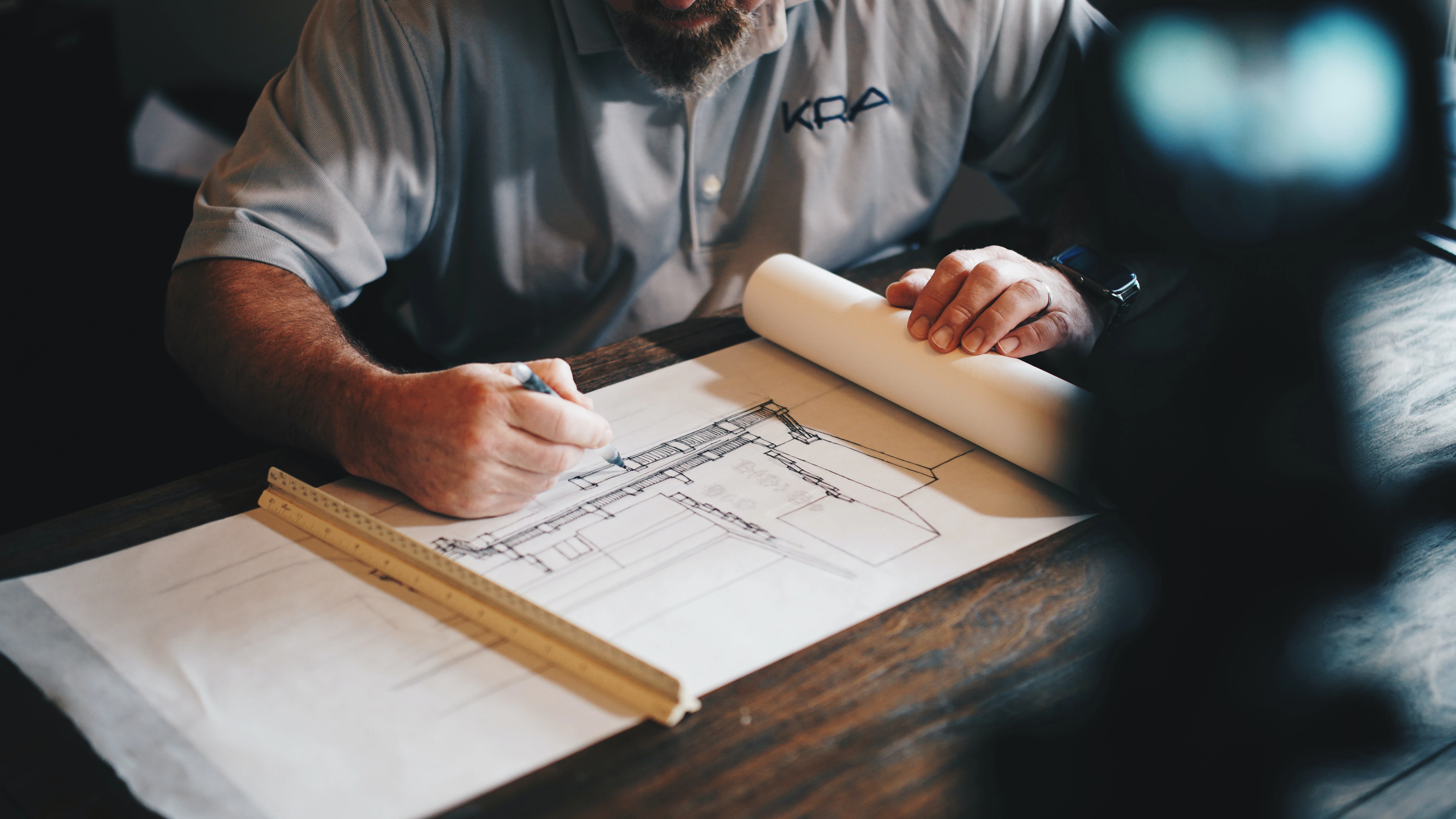
Every landed home renovation or rebuild follows a clear sequence. Your contractor manages these phases so you always know what’s happening and when.
Pre-construction (Planning & Approvals)
The goal of this stage is to ensure that everything is approved, so you can build legally and safely. Before any construction starts, the contractor and QP (architect/engineer) will:
- Check what is allowed on your land (height limits, setback distances, sewer/drainage lines, road reserve, etc.)
- Confirm whether your project is A&A or a full rebuild
- Finalise your design, budget, and estimated timeline
- Prepare and submit applications to URA (design rules) and BCA (safety and structural rules)
Submission & Clearances
All permits should be secured as well before work begins. Hence, your contractor coordinates all approvals, including:
- URA planning permission (if required)
- Building plans submitted to BCA via CORENET, including structural safety plans.
- Checks with utilities & technical departments (drainage, sewer, electricity, water)
Some small works inside the house may qualify for a simplified submission, meaning faster approvals.
Construction Phase
At this point, your contractor’s goal is to build safely and on schedule, in accordance with approved plans. Once approvals are in place, the physical work starts:
- Site setup (fencing, hoarding, safety measures)
- Demolition if rebuilding, or structural preparation if A&A
- Foundation & structural works
- Main building works: walls, roof, M&E services (electrical, plumbing)
- Finishing and quality checks
The contractor oversees workers, quality, materials and safety throughout.
Completion & Occupancy
To officially complete the project:
- QP and contractor inspect the site
- Defects are identified and rectified
- Apply for TOP or CSC (for rebuilds) or required inspections (for A&A)
- Handover of keys and warranty/defects period begins
In the end, the contractor’s measure of project completion is ensuring your home is safe, compliant, and fully ready for living.
Why Engaging the Right Contractor Matters
When you embark on a landed home project in Singapore, the right contractor brings these advantages:
- Risk reduction: They save you from non-compliance with URA guidelines or BCA plan submission errors, which can lead to rectifications or legal issues.
- Clarity on cost & scope: They help you understand whether your plan qualifies as A&A or needs a full rebuild, the implications of envelope control, builder licensing, and submission risks.
- Coordination expertise: They liaise with QP, architects, engineers, and authorities (URA, BCA), and handle paperwork so you don’t have to.
- Safety & neighbour management: They proactively manage site safety and neighbour relations so your works don’t become a nuisance or cause disputes.
- Compliance assurance: They hold the builder accountable to the BCA builder-licensing scheme and submission regime. BCA emphasises builder accountability under its regulations.
A contractor who treats your project as “just another build” rather than a comprehensive regulatory-plus-construction project is likely to expose you to risk, cost creep and delay.
How to Choose Your Landed House Contractor in Singapore
When choosing a contractor for a landed-house project in Singapore, ask these 6 questions:
- Do they specialise in landed homes? Make sure they’ve handled both A&A and full rebuild projects, with a proven record of managing URA zoning rules and BCA building plan submissions.
- Who handles the approvals and design coordination? A good contractor works closely with the QP (architect + structural engineer) and has a clear plan for submission strategy, delays or objections from URA/BCA, and other construction changes.
- Does BCA properly license them? Request their Builder’s Licence class (A1/A2/B1, etc.) so you know they are authorised for landed works.
- How do they manage the site and neighbours? Check their approach to site safety, noise and working hours, damage prevention, and traffic and cleanliness in your estate.
- How transparent are they about costs and timelines? Ask for a clear schedule, cost breakdown, and communication plan.
- Do they keep up with rule changes? Regulations evolve, so should your contractor’s knowledge.
PCE Build: Your Partner for URA & BCA-Ready Landed Homes
Every landed home project in Singapore must pass the same tests: URA envelope-control compliance, correct BCA plan submission, proper builder licensing, safe construction workflows, and smooth neighbour management. The landed house contractor ensures you meet each requirement without delays, redesigns, or fines.
At PCE Build, we focus on delivering landed-house projects that are properly documented, well-coordinated with QPs and authorities, and built to a high construction standard, so you can enjoy peace of mind as you watch your home take shape.
Whether you are renovating under A&A or embarking on a complete rebuild, our team will assess feasibility, advise on regulatory pathways, and guide you through approvals and construction with clear communication at every stage.
Planning upgrades or a full rebuild of your landed home? Contact PCE Build, and let’s build it right from the start.